
Festival of Faiths
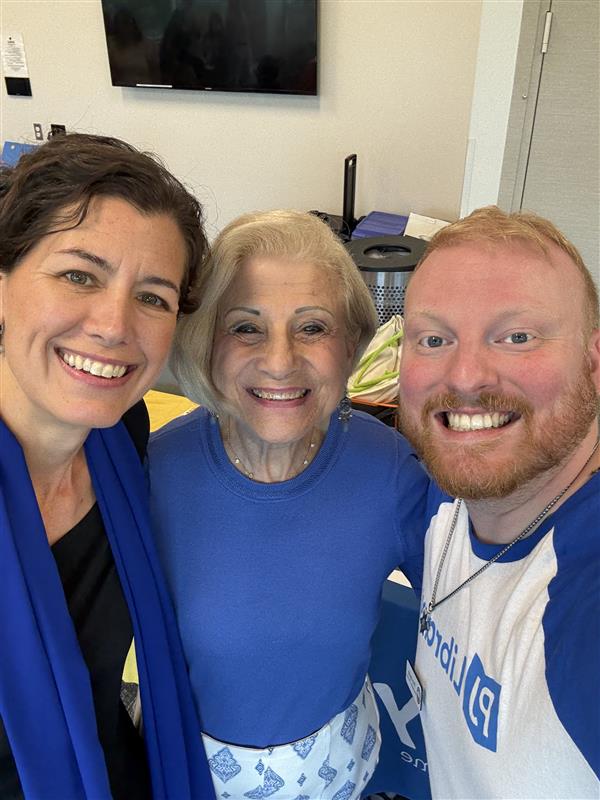
Editor’s Note: This article originally appeared in the Winter 2025 Issue of the Jewish Journal.
NOVEMBER 12, 2025 —
“Do you know what Havdalah is?”
“Have you ever tried challah?”
These were the questions we greeted people with at the Festival of Faiths.
I had the joy of hosting a table at the Festival of Faiths in San Antonio, where hundreds of people from across the city came together to learn, celebrate, and share. Our table was all about Shabbat, and it was wonderful to see so many curious faces stop by to experience a taste of Jewish tradition.
Families and individuals were invited to enjoy challah and grape juice, browse through a selection of free Jewish-themed PJ Library books, and take part in a hands-on Havdalah spice-making activity. The table was filled with the sweet, comforting smells of cloves and cinnamon as children mixed their own spice bags to take home—a sensory way of teaching how Jewish families mark the transition from Shabbat back into the week.
The visitors loved hearing about this tradition, asked about the twisted candle, and wanted to smell the spices so they could “have a sweet week.” As they walked away with their own spice bags, they got a glimpse into what Judaism is about: being grateful, hopeful, and prayerful, and had the chance to ask questions of Jewish people open to having a conversation.
I was happy to participate because I wanted to be able to help educate the public about Jewish traditions. I was concerned that people would not be interested in wanting to be informed, but I was pleasantly surprised by the large attendance and the curiosity of the guests were wanting to know about the Havdalah service and the meaning of the spices. It was surprising to see how guests enjoyed the spices and how lovely the purpose of the Havdalah service is to begin a new week. Those who attended walked away having a better understanding of some of the Jewish traditions.
Some of the questions people asked were especially thoughtful:
“Why do Jews use wine and bread to welcome Shabbat?”
“Why do the spices matter if Shabbat is over?”
“Do all Jewish families celebrate Shabbat the same way?”
“How do kids take part in the rituals?”
What struck me most was how many parents and adults commented that the idea of Shabbat—taking intentional time to pause, rest, and be present with family—felt deeply meaningful and could be beneficial for everyone, regardless of religious affiliation. Those conversations opened up wonderful opportunities to talk about Jewish wisdom as something both particular and universal.
– Jean Karren